



Latest publication
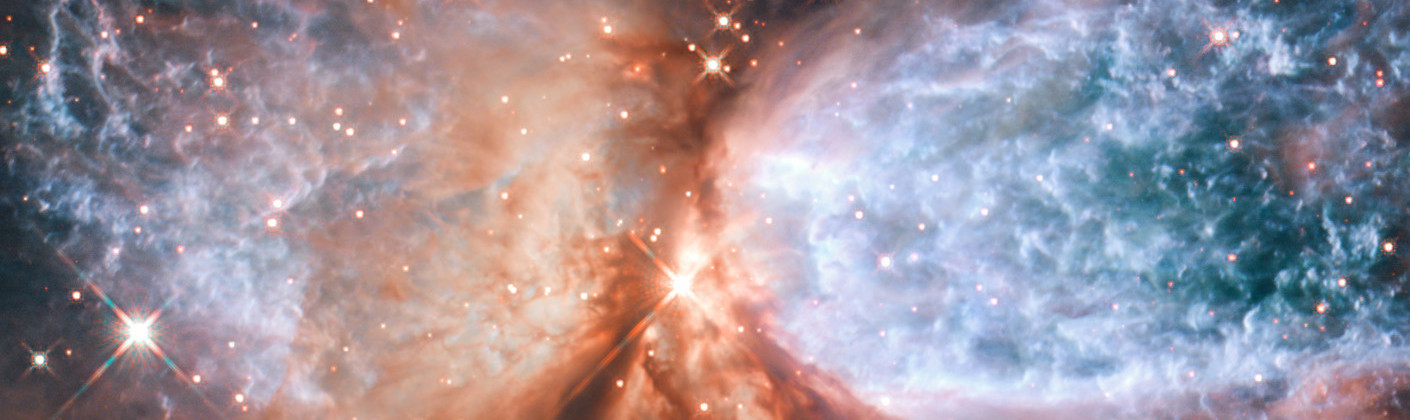
Probing Star-forming Properties via ALMA Observations of Massive Protocluster IRAS 15596-5301
Chang, Faxian; Tang, Mengyao; Liu, Tie; Zapata, Luis A.; Yang, Dongting; Peng, Yaping; Zhang, Chao; Xu, Fengwei; Chen, Y. H.; Li, Shujie; Ruan, Meng
2026/05, Research in Astronomy and Astrophysics, 26, 055004
Next Colloquium
2026/04/09
Rosa Becerra, IA-UNAM
Host: Ramandeep Gill
Exploring the Transient Universe from Mexico with COLIBRÍ
Host: Ramandeep Gill
Exploring the Transient Universe from Mexico with COLIBRÍ
In this talk, I will introduce how we explore the ever-changing sky by detecting and rapidly following up on optical transients,brief, powerful events such as gamma-ray burst counterparts, fast X-ray transients, fast blue optical transients, tidal disruption events, and supernovae.
At the heart of this effort is COLIBRÍ, a robotic telescope located at the Observatorio Astronómico Nacional in San Pedro Mártir, Mexico. Designed to respond quickly to new events in the sky, COLIBRÍ allows us to capture some of the earliest light from these fleeting explosions and follow their changes over time. I will describe how we decide which cosmic events to observe, how often we look at them, and how we analyse their evolution (from the very first seconds after an explosion to weeks later) in order to better understand the extreme physics behind these phenomena.
I will highlight how this facility is helping us explore the dynamic Universe, and discuss the many opportunities it opens for collaboration, inviting the broader community to take part in this exciting field of time-domain astronomy.